The short answer
The easiest way to tell if your roof has hail damage is to check the soft metal around your house first: dented gutters, downspouts, AC fins, and roof vents mean hail big enough to hurt shingles probably hit your roof too. On the roof itself, hail damage looks like dark, random spots where the granules got knocked off and the black asphalt underneath is showing.
You usually can’t see it from the driveway. Most hail-damaged roofs don’t leak right away, so a lot of homeowners assume they’re fine. Then the leak shows up two years later, after their window to file has closed.
I’ve been on hundreds of DFW roofs after hail, and I’ve stood next to the adjuster on a lot of them. Here’s the straight version of what to look for.
Start on the ground: what you can check safely
Don’t climb your roof. It’s steep, it’s hot, and one slip is a trip to the ER. You can learn a lot without a ladder.
Walk around the house and look for:
- Dented gutters and downspouts. Run your eyes along the gutter face. Hail leaves round dings.
- AC condenser fins. Look at the metal fins on your outside unit. Hail crushes them flat in spots.
- Metal roof vents and turbines. You can often see dents on these from the yard, especially with the sun behind you.
- Window screens, window wraps, and light fixtures. Torn screens and dented metal trim are hail tells.
- Fences, decks, and painted wood. Fresh dings or spatter marks on the side facing the storm.
- Granules at the downspouts. A pile of what looks like coarse black sand where the downspouts drain means granules came off your shingles. (A brand-new roof sheds some granules its first year, so this counts more on an older roof.)
- Your car and your neighbors’ cars. If cars on your street got dented, your roof took hits too.
One more thing that works better than any app: check your neighborhood Facebook group or Nextdoor. When hail really hits an area, neighbors post stones in their hands, dented cars, and “did everyone get hit?” threads. Radar hail maps are estimates of hail size up in the storm, not what landed on your street. We’ve driven to spots a map showed as 2-inch hail and found nothing. When the neighborhood group is quiet, that’s worth paying attention to as well.
What hail damage looks like on the roof
This is what a roofer looks for up top:
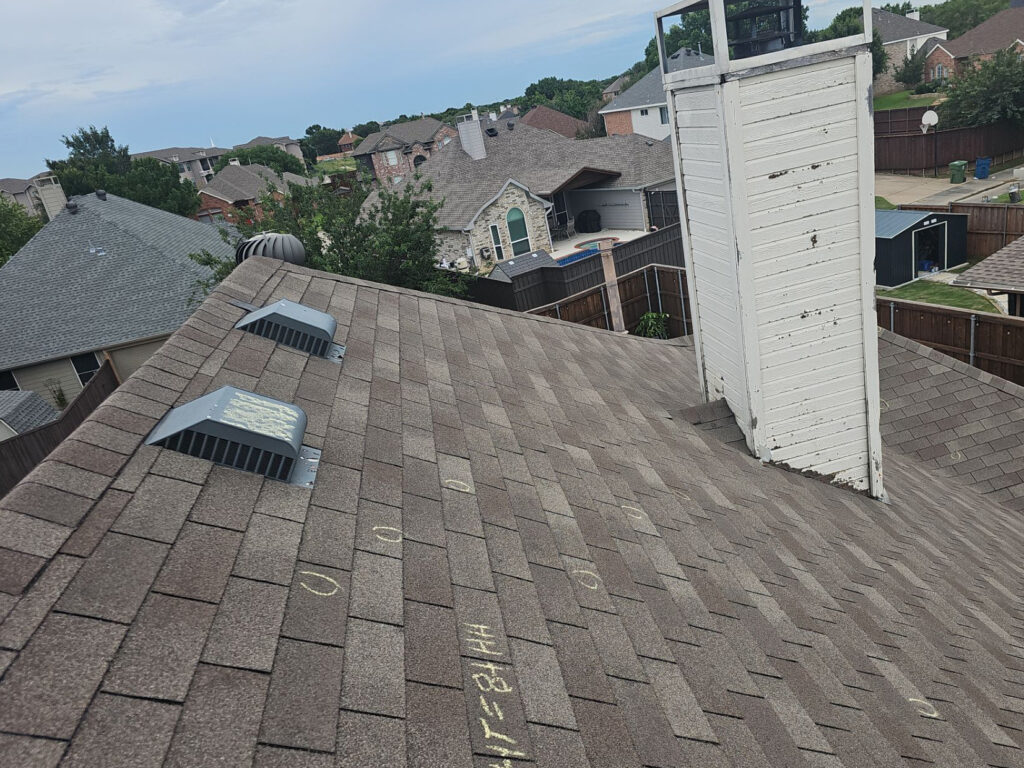
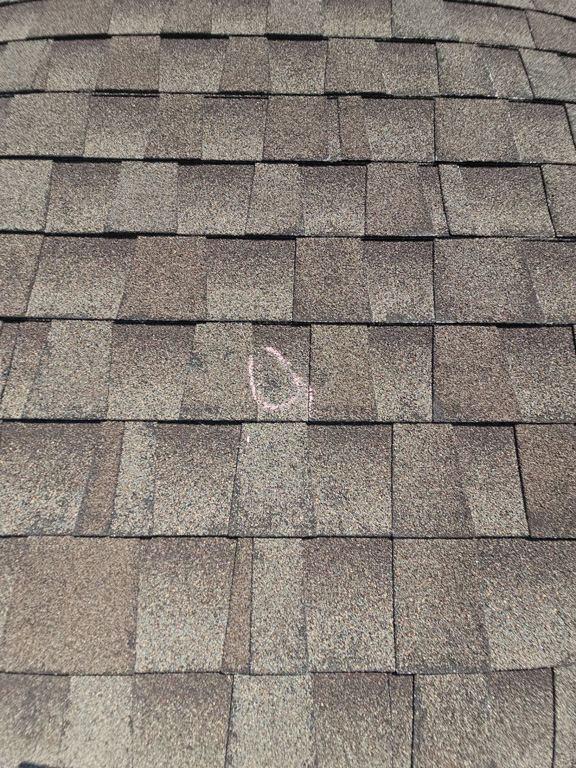
- Bruises. Dark spots where the hail knocked the granules off. Press on one and it can feel soft, like a bruised apple.
- Exposed asphalt. Granules are the shingle’s armor against the Texas sun. When hail strips them off and the asphalt is showing, that spot starts breaking down fast and the shingle won’t last as long as it was built to. That’s damage.
- Cracked or torn shingles. Wind-driven hail can split shingle edges or tear corners.
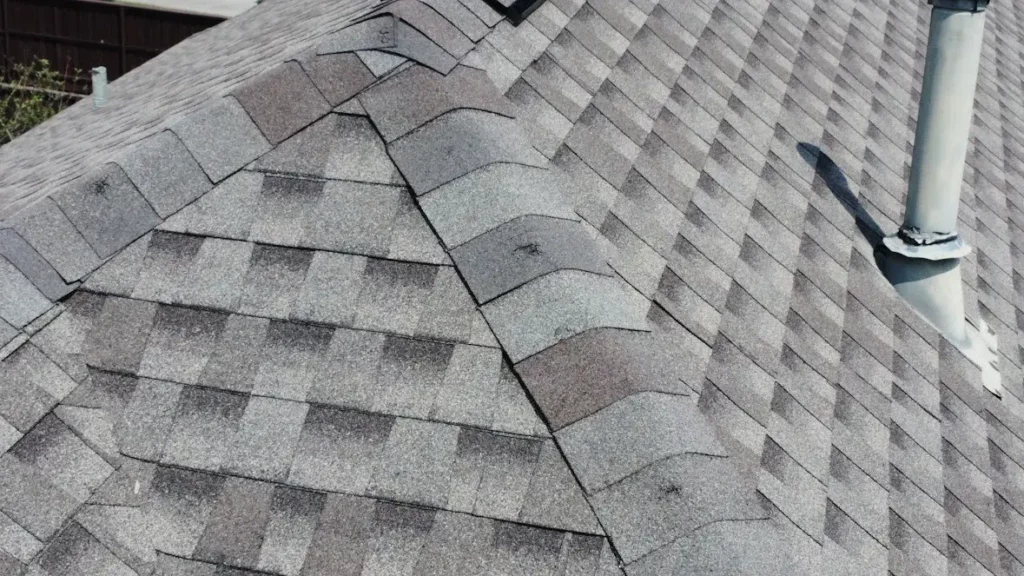
- Dented metal on the roof. Pipe boots, flashing, ridge vents, and turbine vents.
- A random pattern. Hail doesn’t hit in neat lines. The hits are scattered, and they’re heavier on the slopes that faced the storm.
Adjusters usually work in test squares, a 10-foot by 10-foot area on each slope, and count the hits inside it. That’s a big area, about 21 rows of shingles tall. When I find enough bruises in a 10×10, I call that claimable damage. The insurance company makes the final call on coverage, but that’s what I document and show them.
Hail damage vs. normal wear (where people get tripped up)
Not every spot on a roof is hail. This is the stuff an adjuster will point to, so know the difference:
- Blistering. Small raised bubbles that pop open, usually from heat. They tend to show up in clusters, not scattered like hail hits.
- Even granule wear. An old roof loses granules evenly across the whole surface. Hail leaves spots.
- Age cracking. Long, thin cracks from years of heat and cold, not round impact marks.
- Scuffs. Marks from foot traffic, tree limbs rubbing, or a previous repair.
If a carrier calls your damage “wear and tear,” this is the argument. Good photos taken close to the storm date, plus dented metal around the house, make it a lot harder to wave off.
A quick word on “cosmetic.” Some Texas policies have a cosmetic damage exclusion, mostly aimed at metal roofs and metal parts. That’s a policy term, and it’s on your declarations page. Read yours so you know what you’re working with.
What size hail damages a roof?
For a typical asphalt shingle roof, the rule of thumb is about 1 inch (quarter-sized) and up. But it’s not a hard line. An older roof, hail driven sideways by high wind, or a lot of smaller stones can still do damage. On the other end, impact-resistant Class 4 shingles hold up to bigger hail. The size alone won’t tell you. The roof will.
What to do if you think hail hit your roof
- Write down the storm date. Your claim is tied to the date of loss, so you’ll need it.
- Take photos from the ground. Dented gutters, AC fins, cars, and hailstones next to a coin for scale. Date-stamped photos help.
- Get a free inspection before you call your insurance. You want to know if there’s real damage first. File thin, with just a few spots, and the carrier may pay for only those spots. If that total lands under your deductible, you get a letter and no check.
- Read your declarations page. Look for your wind/hail deductible (a lot of Texas policies use 1% or 2% of your home’s insured value now) and any roof or cosmetic endorsements.
- File promptly. Most policies require prompt notice, and many set a deadline, often one year from the date of loss and sometimes two. Check yours. If a spring storm hit this year, the clock is already running.
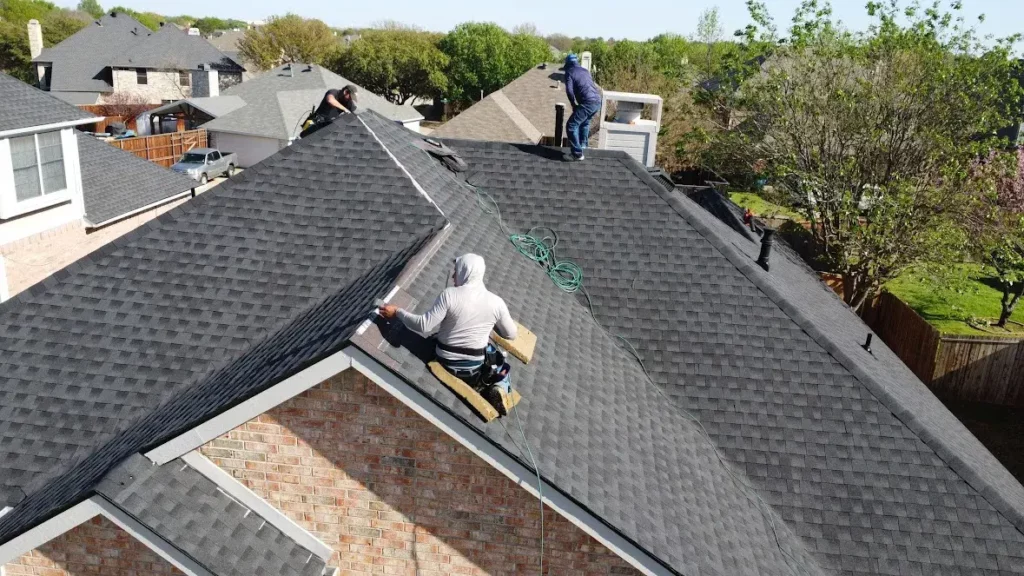
- Have your roofer there when the adjuster comes. Someone who knows the roof should walk it with the adjuster and show every hit they documented.
Watch out for storm chasers
After a big hail storm, out-of-town crews flood DFW. Some are fine. Some are gone by the time your warranty matters. Red flags:
- Pressure to sign something on the spot
- No local address or reviews
- Any offer to “waive,” “cover,” or “eat” your deductible. That’s illegal in Texas. You pay your deductible, period. A roofer who breaks that law will cut other corners too.
The bottom line
If the metal around your house is dented, get your roof looked at. Hail damage hides, doesn’t leak right away, and has a filing deadline. The worst outcome is finding it after that window closes.
Biltmore Roofing is veteran-owned and based in Lewisville. We’ve put 50+ roofs on in Valley Ridge Estates alone, and we serve all of Dallas–Fort Worth. We’ll get on your roof, photograph what we find, and tell you straight whether it’s hail damage, including when it isn’t. We’re your contractor, not a public adjuster, and your insurance company decides coverage. We just make sure they see everything that’s up there.
Think hail got your roof? Call us for a free inspection: (817) 714-3366.
FAQ
Can a roof have hail damage without leaking?
Is granule loss from hail considered damage?
What size hail causes roof damage?
Should I get an inspection before I file a claim?
How long do I have to file a hail claim in Texas?
This article is general information for Texas homeowners, not legal or insurance advice. Coverage depends on your specific policy — read yours or ask us to help you understand it.